
2026 Honda CRF250R Suspension & Chassis Breakdown
Suspension & Chassis Breakdown: 2026 Honda CRF250R
A closer look at the components that shape cornering feel, stability, and bump absorption—plus practical setup notes for track days around San Diego.

Factory suspension specs (quick reference)
These numbers are a great starting point when you’re comparing bikes or planning your first baseline setup. From there, clickers and sag are where the bike becomes your bike.
Chassis geometry (from Honda specs)
Geometry works with suspension settings: small changes to ride height (sag, fork position) can noticeably change turn-in and straight-line stability.
What to feel for: front-end confidence vs. rear traction
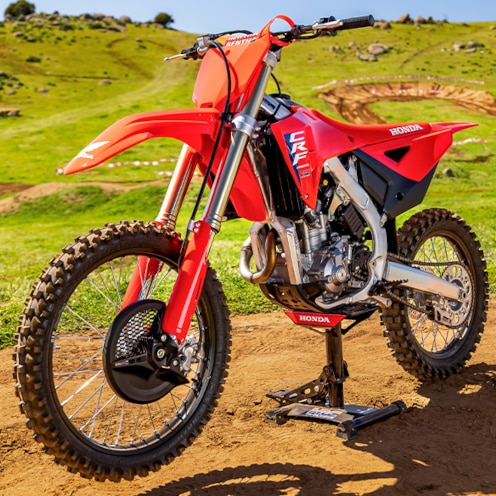
Showa® 49mm inverted fork
The fork is your primary tool for controlling braking dive, mid-corner support, and how the bike tracks through chop. A balanced front end helps you commit to ruts and square edges without deflection.
- Too soft: excessive dive, vague feel entering corners.
- Too firm: harshness, front tire skips across bumps.
- Goal: planted steering with predictable feedback.
Pro-Link® rear shock
The rear shock influences drive out of corners, how the bike settles on jump faces, and how it stays composed when the track gets rough late in the day.
- Too soft: wallow, rear rides low, traction feels inconsistent.
- Too firm: kicks on braking bumps, reduced hookup.
- Goal: controlled squat with strong forward bite.


Baseline setup notes (simple, track-day friendly)
Start with ride height
Before chasing clickers, confirm your sag and overall balance. If the bike turns wide, it may be riding too low in the rear; if it feels nervous, it may be too tall in front. Small changes can make a big difference.
Change one thing at a time
Make a single adjustment, then ride the same section repeatedly. Keep notes on braking bumps, corner entry, and acceleration chop. Consistency helps you find a setup that works across different San Diego track conditions.
Tip: If you’re unsure where to begin, our team can help you build a sensible baseline for your weight and riding style when you come in to see the bike.