
2026 Honda Pioneer 700-4 Deluxe Suspension & Chassis Breakdown | Poway Powersports
2026 Honda Pioneer 700-4 Deluxe
Suspension & Chassis Breakdown
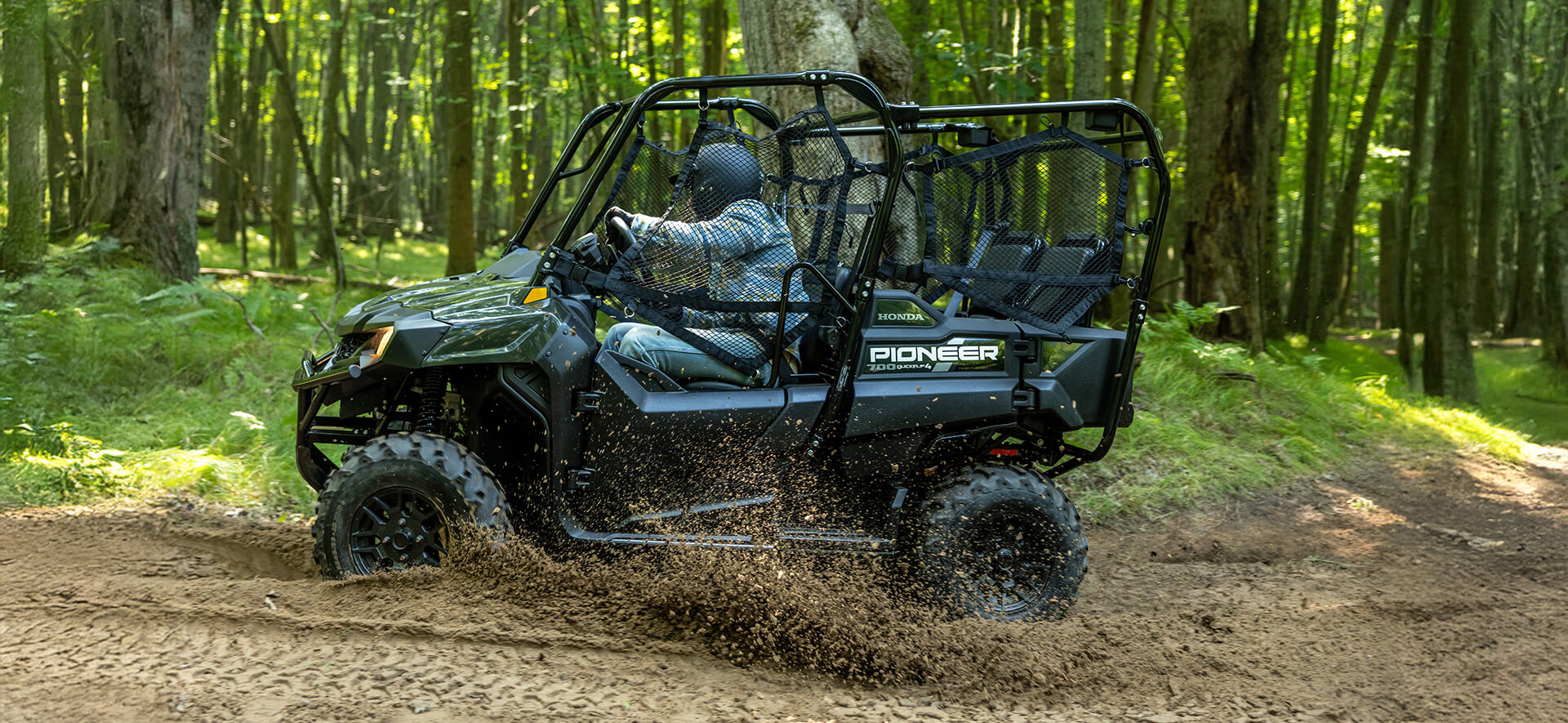
- Front suspension: Independent double-wishbone; 7.9-inch travel
- Rear suspension: Independent double-wishbone; 9.1-inch travel
- Ground clearance: 10.7 inches
- Wheelbase: 76.8 inches
- Turning radius: 14.8 feet
- Curb weight: 1446 pounds (includes all standard equipment, required fluids and a full tank of fuel)
Front suspension: independent double-wishbone confidence

The Pioneer 700-4 Deluxe uses an independent double-wishbone front suspension with 7.9 inches of travel. In real-world riding, that design helps each front wheel react to bumps independently, which can reduce steering kickback and keep the chassis more settled when the trail gets choppy.
- More predictable tracking through ruts and uneven terrain
- Better front-end composure when carrying passengers and gear
- A smoother feel at moderate trail speeds
Rear suspension: travel and adjustability for changing loads
Out back, the Pioneer 700-4 Deluxe runs an independent double-wishbone rear suspension with 9.1 inches of travel. The rear shocks feature adjustable preload, which is especially helpful when your day changes from a light trail ride to hauling tools, coolers, or extra passengers.
Always follow the owner’s manual guidance and adjust evenly side-to-side.

Tires & stance
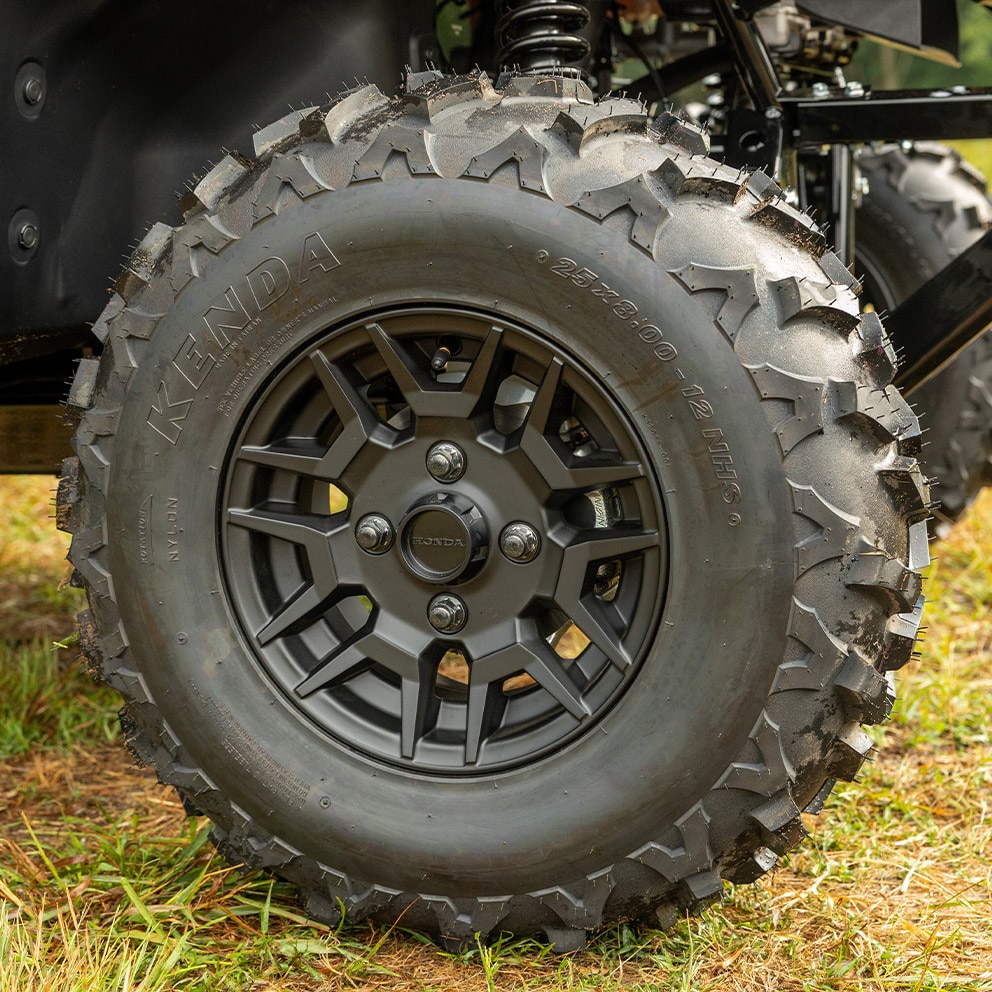
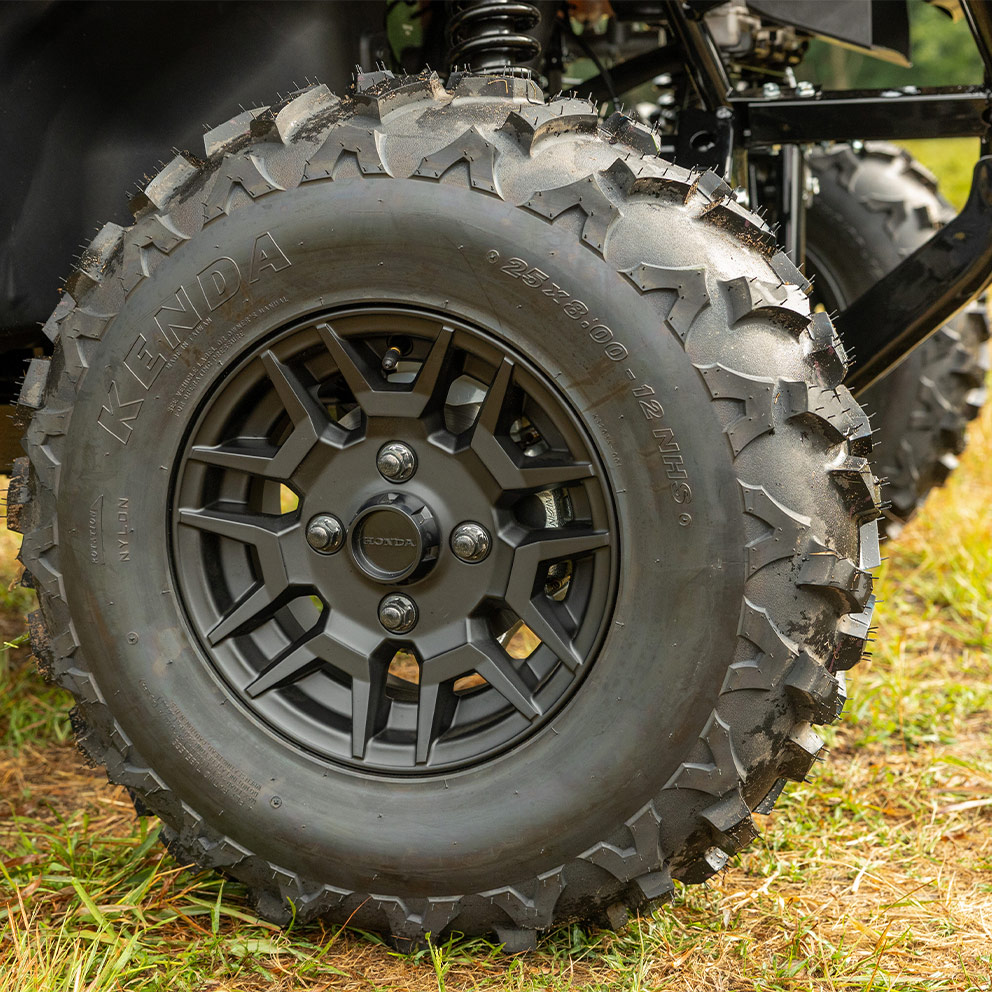
The Pioneer 700-4 Deluxe comes with new Kenda tires sized to match its trail-and-work mission.
- Front tires: 25 x 8-12
- Rear tires: 25 x 10-12
- Width: 59.9 inches
Brakes & control
Disc brakes help deliver consistent stopping performance whether you’re cruising trails or working around property.
- Front brakes: Dual 200mm discs
- Rear brake: Single 170mm disc
Chassis dimensions that matter on San Diego trails
If you’re planning tight trail sections, the 14.8-foot turning radius is a helpful reference point. For mixed-use days, the chassis is also rated for 1000-pound bed capacity and 1500-pound towing capacity, so suspension setup and tire pressure become even more important when you’re loaded up.


