
2025 Honda FourTrax Rancher Suspension & Chassis Breakdown | Poway Powersports
Suspension & Chassis Breakdown
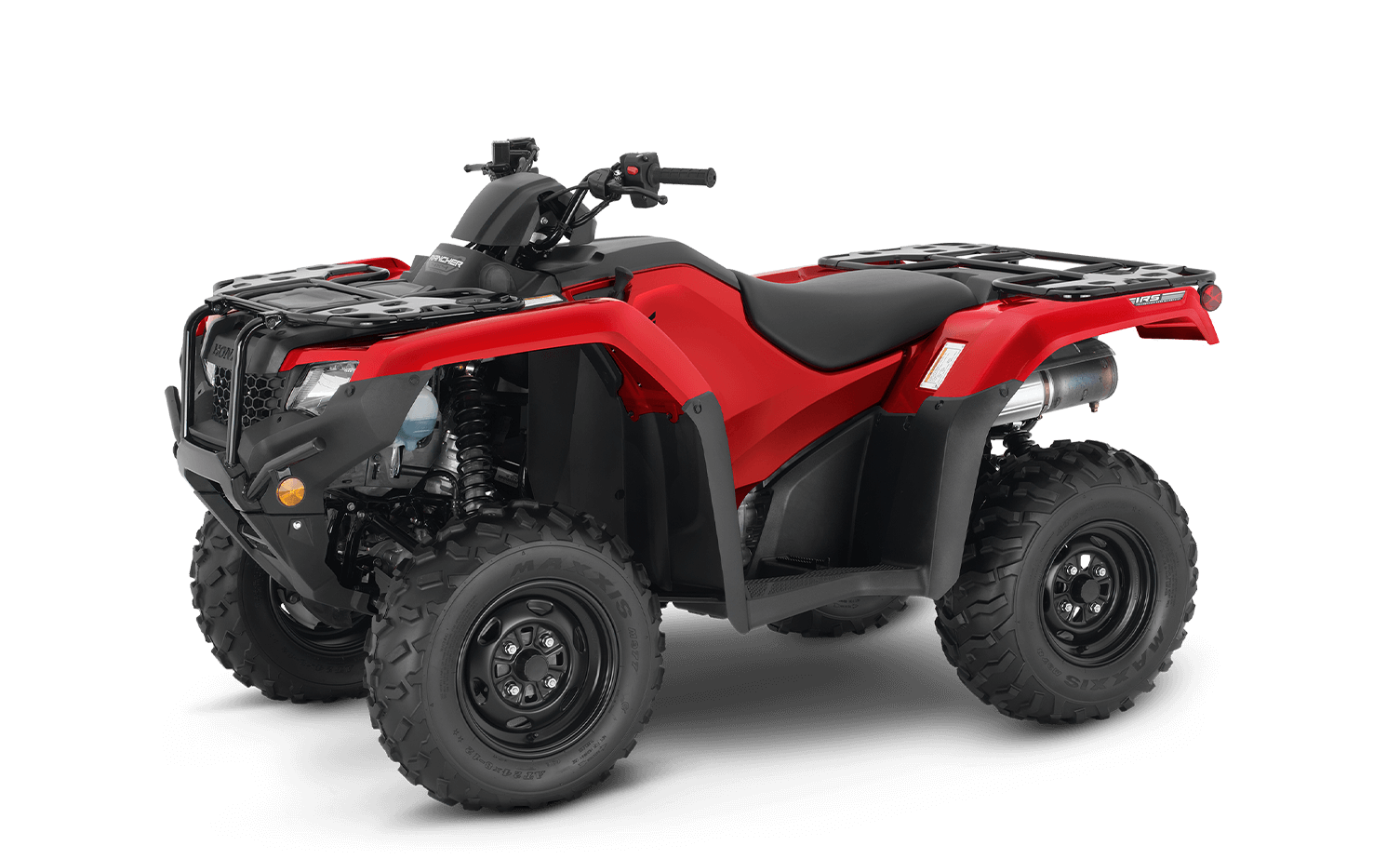
How it’s set up
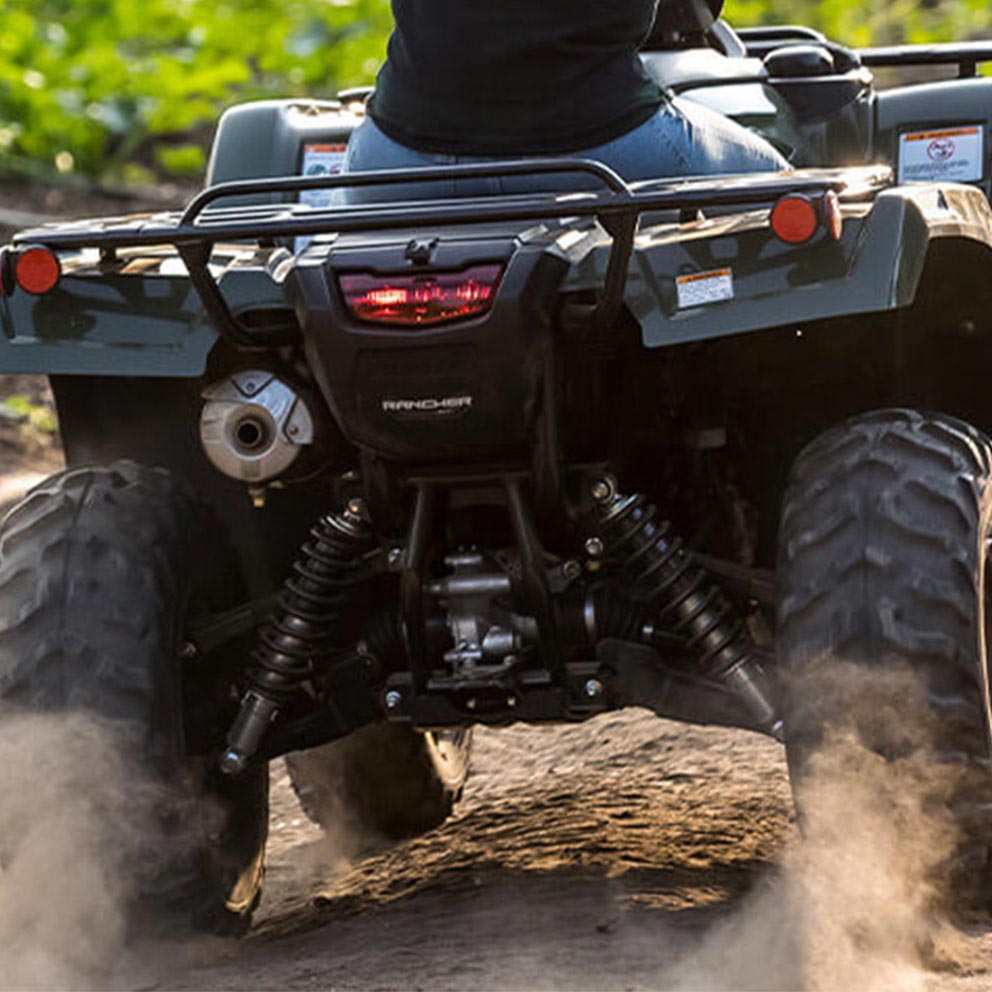


Why suspension matters on a Rancher
On an ATV like the FourTrax Rancher, the suspension and chassis do more than smooth out bumps—they help keep the tires planted, reduce rider fatigue, and maintain predictable steering when the trail gets rutted, rocky, or off-camber. This trim pairs a 4x4 driveline with Independent Rear Suspension (IRS) and Electric Power Steering (EPS), which is a strong combination for mixed-use riding around San Diego.
Below is a practical breakdown of what the Rancher’s chassis layout and travel numbers mean when you’re cruising fire roads, navigating washboard sections, or working around property.
Chassis quick specs
Front end: independent double-wishbone (7.3 in travel)
The independent double-wishbone front suspension is designed to help each front wheel react to bumps without forcing the opposite side to follow. In real riding, that can translate to steadier steering when you hit uneven edges, potholes, or small ledges—especially when you’re carrying a bit of speed on hardpack.

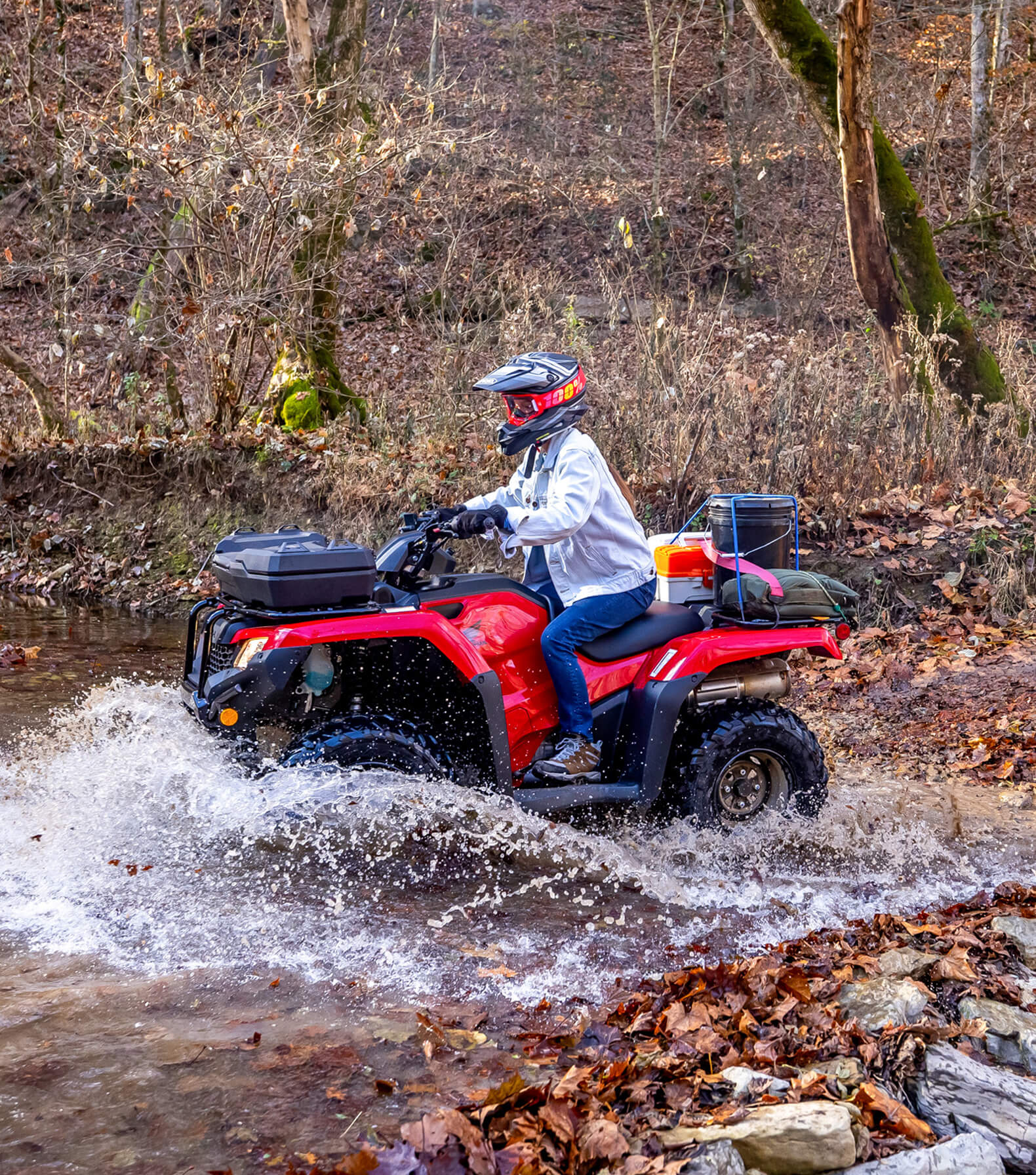
Rear end: IRS dual-arm (8.5 in travel)
Independent Rear Suspension (IRS) is a big deal for comfort and composure. With 8.5 inches of rear travel, the Rancher is set up to absorb repeated hits and keep the rear tires following the ground rather than skipping across it. That can be especially noticeable on washboard roads and rocky sections where traction and stability matter.
IRS can also help reduce the “kick” you feel through the seat when one rear wheel drops into a hole or climbs over a rock. The result is a smoother ride for longer days and more confidence when the terrain changes quickly.
Steering feel: EPS support when the trail fights back
Electric Power Steering (EPS) is about control as much as comfort. When the front tires hit rocks, roots, or ruts, EPS can reduce the amount of feedback that tries to twist the bars out of your hands. That’s helpful for newer riders and appreciated by experienced riders on longer days.
- Less arm fatigue on rough terrain
- More precise line choice through ruts and off-camber sections
- More comfortable low-speed maneuvering
Braking & chassis control
The Rancher uses disc brakes front and rear (dual 193mm front discs and a 170mm rear disc). Strong, consistent braking helps you manage weight transfer and keep the chassis settled when descending or approaching tighter turns.
Suspension & chassis FAQ
Keep your listing handy
Photos, installed accessories, and availability can vary by unit. For the most up-to-date details on this FourTrax Rancher at Poway Powersports, use the product listing link below.