2025 Honda CBR500R Suspension & Chassis Breakdown | Poway Powersports

Poway Powersports • San Diego

Suspension & Chassis Breakdown: Honda CBR500R

A closer look at the components that shape the CBR500R’s stability, steering feel, and everyday ride comfort—so you can choose the right sport bike setup with confidence.
2025 Honda CBR500R

Balanced chassis tuning for real-world sport riding

From the inverted Showa fork up front to the Pro-Link rear suspension and steel-tube frame, the CBR500R is built to feel planted in corners while staying approachable for daily commuting around San Diego.
Tip: If you’re comparing options, check the Performance Guide for how chassis feel pairs with engine character.

Quick chassis & suspension specs

Front suspension
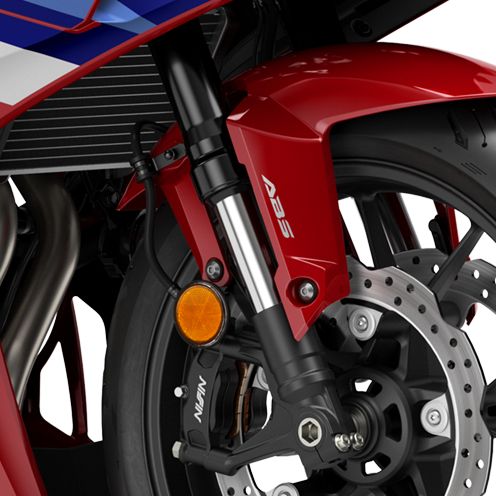
41mm inverted Showa® SFF-BP fork; 4.7-inch travel
Honda CBR500R Showa SFF-BP fork
Rear suspension
Pro-Link® Showa® single shock; 4.7-inch travel
Honda CBR500R lightweight swingarm construction
Frame
Steel-tube frame
Honda CBR500R steel-tube frame
Wheels
Cast wheels
Honda CBR500R cast wheels
Geometry
Rake: 25.5° • Trail: 4.0 in • Wheelbase: 55.5 in
These numbers help explain why the bike can feel stable at speed while still being easy to place in a corner.

How the front end shapes steering feel

The CBR500R uses a 41mm inverted Showa® SFF-BP fork with 4.7 inches of travel. Inverted fork construction places more of the fork’s structure closer to the triple clamps, which can contribute to a more precise feel when you’re loading the front tire through a turn.

On the street, that translates to confidence when you’re transitioning from upright to leaned-over—especially on uneven pavement where the fork has to manage bumps without upsetting your line.

What you’ll notice
More planted feedback at the bars when cornering and braking.
Why it matters
A stable front end helps you ride smoother and build skill faster.
2025 Honda CBR500R side view
Street-ready balance
A sport-bike stance with everyday usability. For a broader overview of the model, visit the Features & Technology page.

Rear suspension, swingarm, and traction feel

Out back, the CBR500R uses a Pro-Link® Showa® single shock with 4.7 inches of travel. Pro-Link suspension is designed to help the rear wheel track the road surface while keeping the chassis composed as conditions change—think freeway expansion joints, mid-corner ripples, and quick direction changes.

The bike also features a lightweight swingarm, which can help the suspension react more quickly to bumps. The result is a ride that feels controlled without being harsh—ideal for riders who want a sporty look and feel without giving up comfort.

Honda CBR500R lightweight swingarm
2025 Honda CBR500R rear three-quarter

Wheels, tires, and geometry: what they do on the road

Tire sizes
Front: 120/70R-17
Rear: 160/60-17
Rake & trail
25.5° rake and 4.0 inches of trail support stability and predictable turn-in.
Wheelbase
55.5 inches helps the bike feel composed at speed while staying manageable in traffic.
If you’re shopping locally, see the For Sale in San Diego page for a quick buying overview and next steps.

FAQ: Suspension & chassis

Does the CBR500R have an inverted front fork?
Yes. The front suspension is a 41mm inverted Showa® SFF-BP fork with 4.7-inch travel.
What rear suspension does it use?
A Pro-Link® Showa® single shock with 4.7-inch travel.
What is the frame type?
The CBR500R uses a steel-tube frame.
What are the tire sizes?
Front tire: 120/70R-17. Rear tire: 160/60-17.

Ready to make the CBR500R yours?

Check current availability at Poway Powersports, then start your financing step when you’re ready.
Want to learn about our dealership experience? Why Poway Powersports.