
2026 Honda Rebel 500 ABS SE Suspension & Chassis Breakdown | Poway Powersports
Suspension & Chassis Breakdown
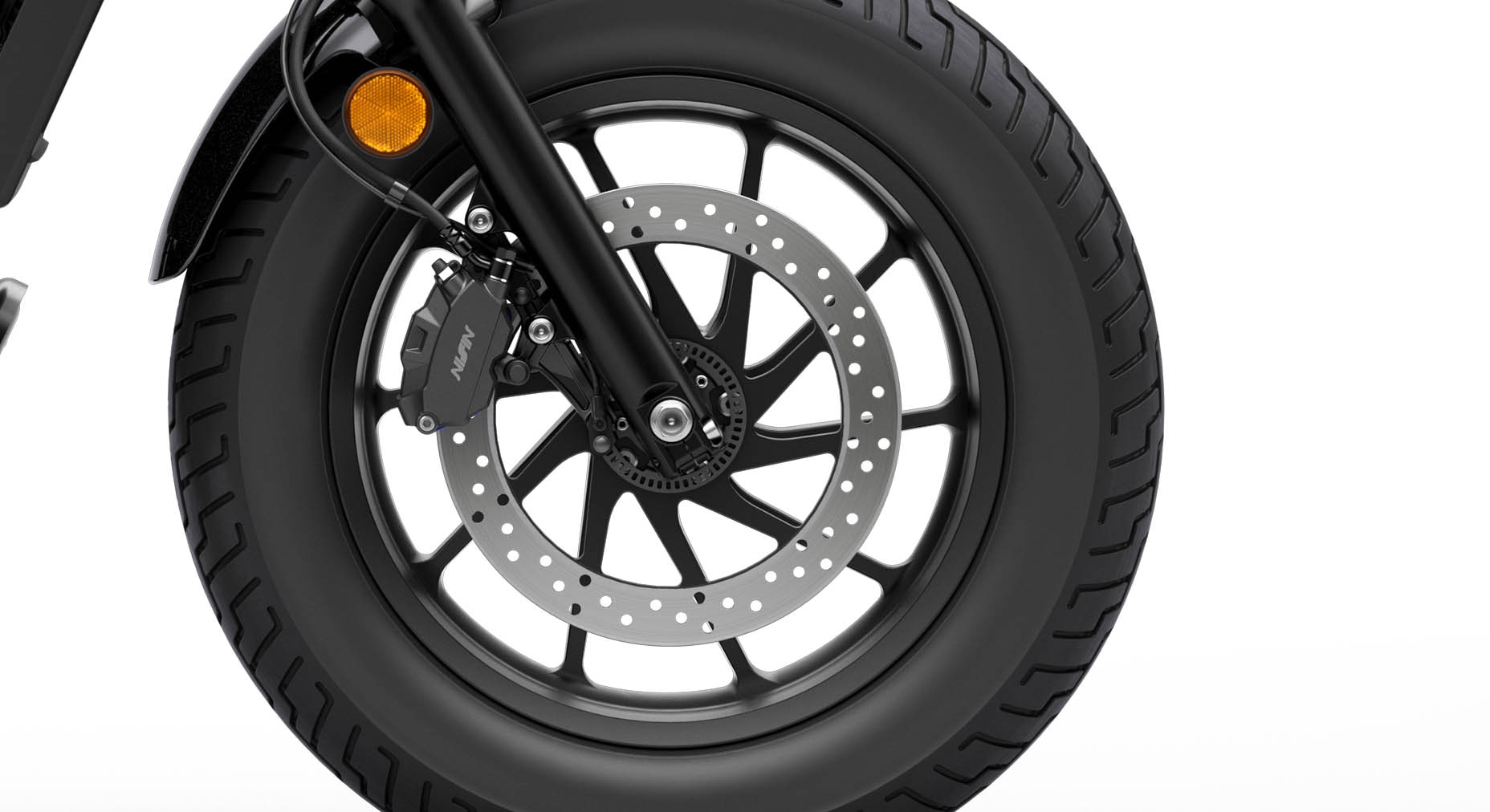
Front suspension: wide, stable fork
Up front, the Rebel 500 ABS SE uses a 41mm fork with 5.5-inch travel. The fork diameter and travel are tuned to keep steering calm over rough pavement while still feeling light at low speeds.

Rear suspension: dual shocks for comfort
The rear uses dual shocks with 3.7-inch travel. This setup supports the cruiser stance while helping the bike stay composed when the road gets choppy.

Chassis & subframe: rigid where it counts
A solid chassis foundation helps the suspension do its job. The Rebel 500 features a die-cast aluminum subframe that contributes to a tight, connected feel between rider and machine.

Geometry & tire setup (why it feels so manageable)
Handling isn’t just suspension—geometry and tires play a huge role in how confident a bike feels. The Rebel 500 ABS SE pairs cruiser-friendly steering numbers with a tire package that supports stability without feeling heavy.
Tip for new riders: the low seat height and stable geometry can make stop-and-go traffic and parking-lot maneuvers feel less intimidating.


FAQ: Suspension & chassis questions
Quick spec snapshot
- Front suspension: 41mm fork; 5.5-inch travel
- Rear suspension: Dual shocks; 3.7-inch travel
- Front brake: Single 296mm disc; ABS
- Rear brake: Single 240mm disc; ABS
- Curb weight: 419 lb (includes required fluids and full tank)