
2025 HONDA CB750 HORNET Suspension & Chassis Breakdown | Poway Powersports
Suspension & Chassis Breakdown
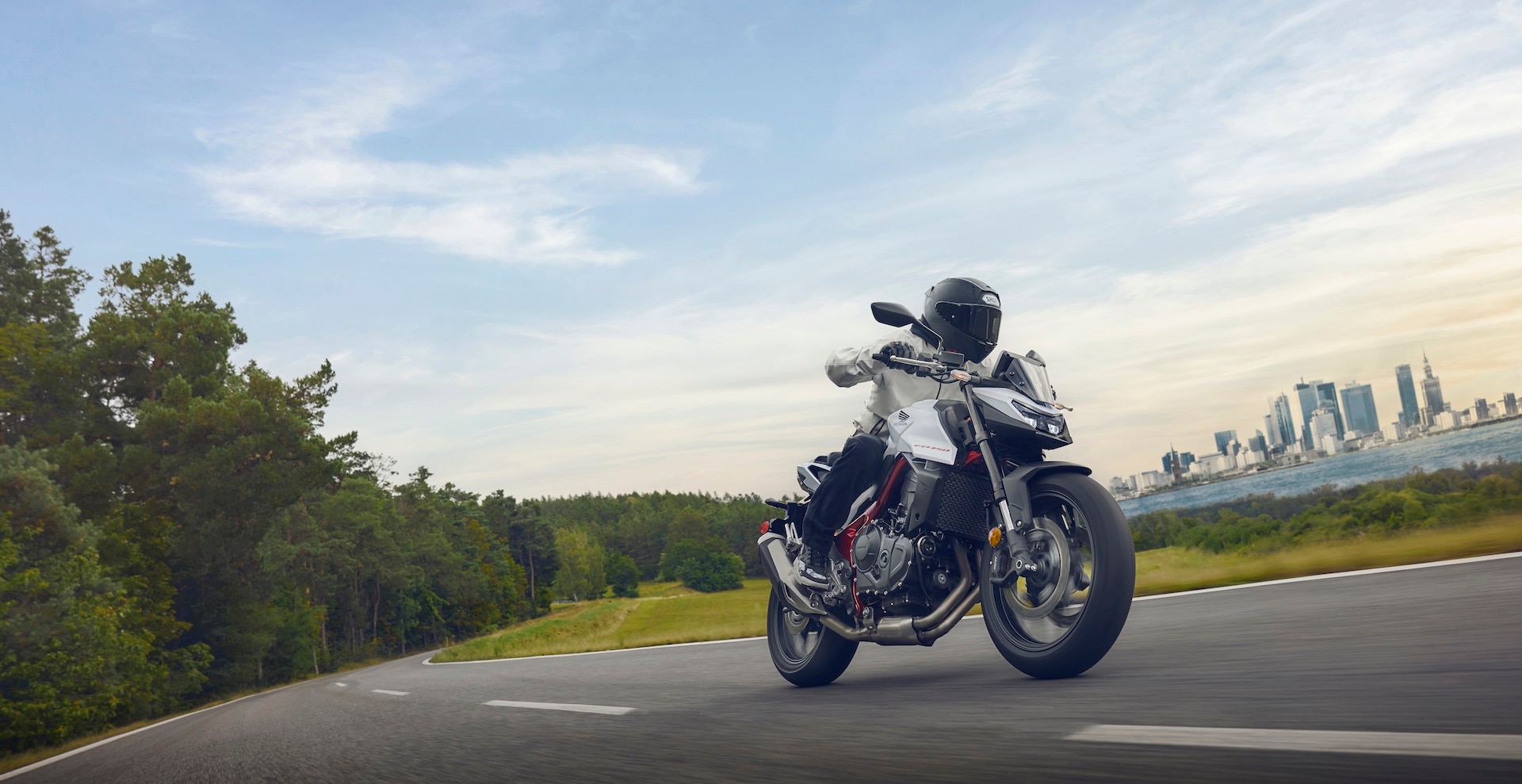
What the chassis is built to do
On a naked sport bike, the chassis is the difference between “fast” and “confidence inspiring.” The 2025 HONDA CB750 HORNET pairs a lean, light, strong platform with quality Showa suspension so you can enjoy quick turn-in, stable mid-corner feel, and predictable braking on San Diego streets.
Below is a practical breakdown of the key suspension, geometry, and contact-patch components that shape how the CB750 Hornet feels on real roads.


Front suspension: Showa inverted SFF-BP fork
Up front, the CB750 Hornet uses a 41mm inverted Showa SFF-BP fork with 4.7-inch travel. Inverted forks help keep the front end rigid under braking and cornering loads, while the SFF-BP design is aimed at delivering a controlled, planted feel when you’re pushing through sweepers or dealing with uneven pavement.
- Inverted layout for strong feedback and stability
- 4.7-inch travel for street comfort without feeling vague
- Pairs well with the bike’s sporty geometry for quick direction changes
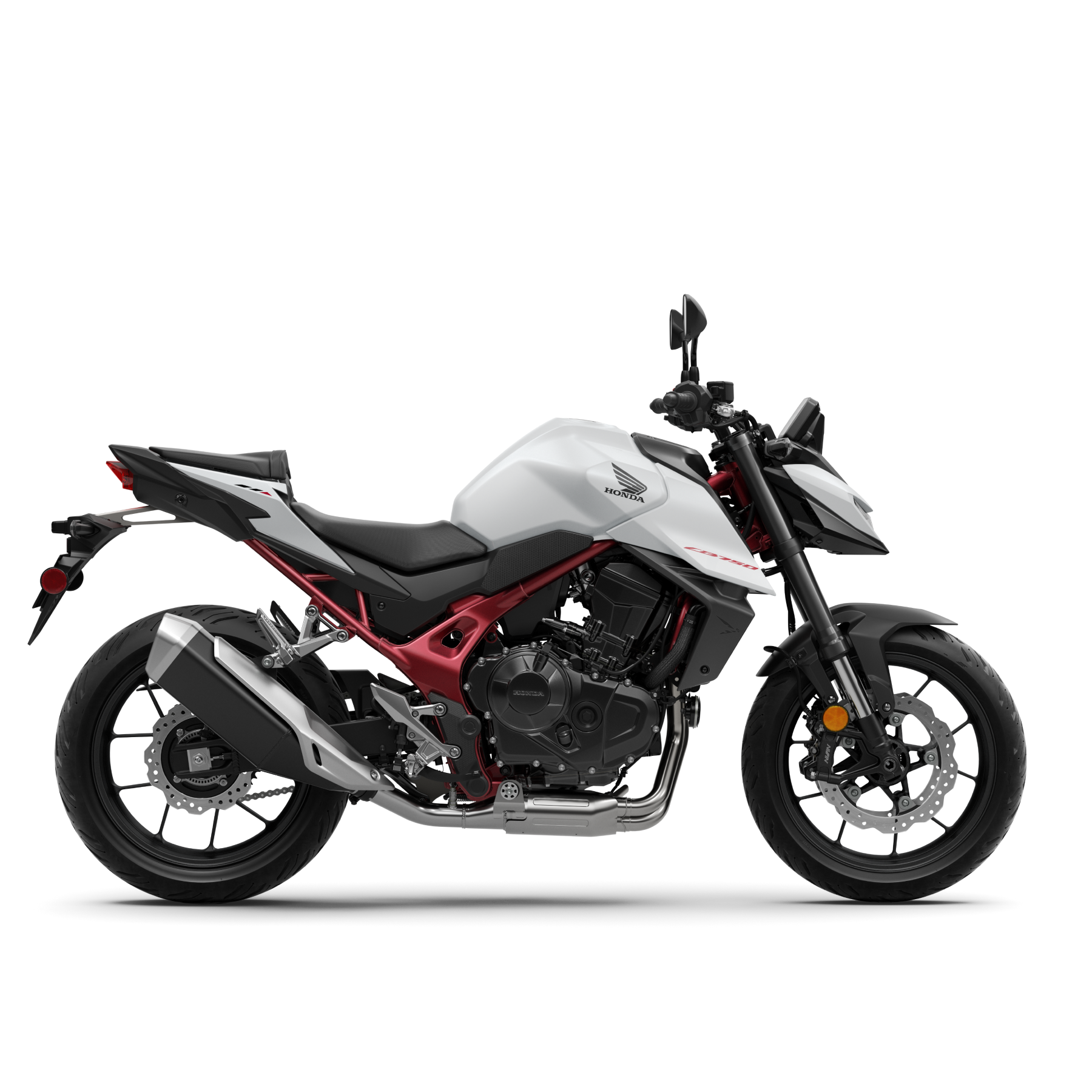
Chassis geometry (quick reference)
These numbers help explain why the Hornet can feel agile while still tracking confidently at speed.
Rear suspension: Pro-Link Showa single shock
The rear uses a Pro-Link Showa single shock with 5.1-inch travel. Pro-Link linkage is designed to balance small-bump compliance with support when the pace picks up. In everyday riding, that can translate to a smoother feel over broken surfaces and a more composed chassis when you roll on the throttle exiting corners.

Brakes & ABS: confidence under pressure
Braking performance is a major part of chassis feel. The CB750 Hornet features dual 296mm front discs with radial-mounted four-piston calipers and ABS, plus a single 240mm rear disc with ABS. That combination is built for strong stopping power and consistent lever feel in everyday traffic and spirited rides.
- Radial calipers help deliver precise, predictable braking
- ABS adds an extra layer of control on variable surfaces
- Balanced front/rear setup supports smooth chassis attitude
Tires, stance, and rider fit
The Hornet rolls on a 120/70-17 front and 160/60-17 rear tire setup—common sport sizing that supports responsive steering and a confident rear contact patch. Seat height is 31.3 inches, and curb weight is listed at 422 pounds (includes standard equipment, required fluids, and a full tank of fuel).